Flagship Research Project
A Contrast Sensitivity Model of the Human Visual System in Modern Conditions for Presenting Video Content
This project developed a multidimensional model of human contrast sensitivity using large-scale psychovisual measurements of spatio-temporal visibility thresholds for modern video presentation conditions.
Key Measurements
Abstract
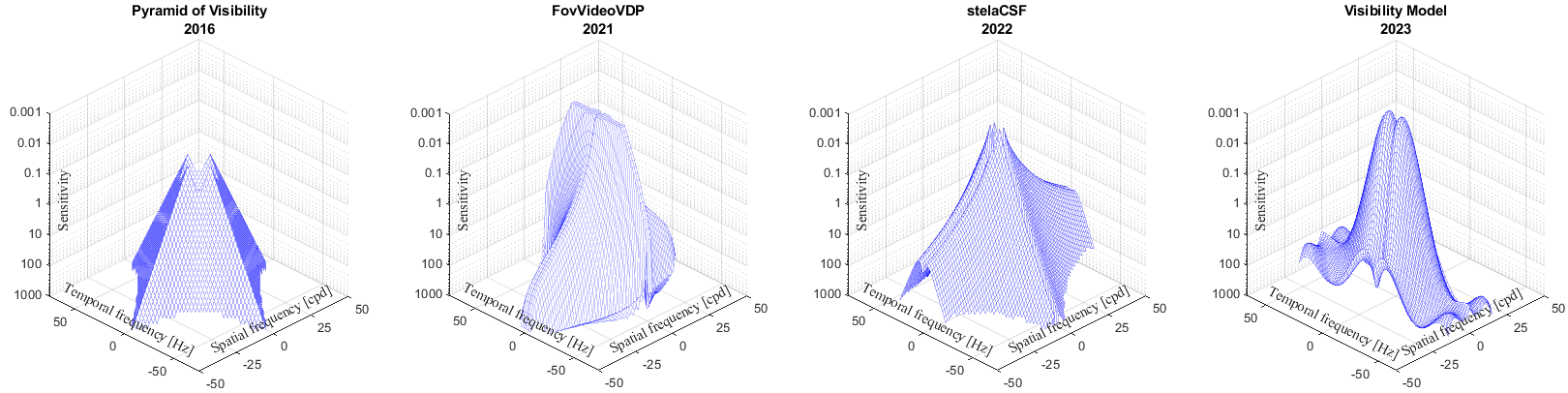
This work measured large-scale thresholds of visibility for spatio-temporal sinusoidal variations that are necessary for determining which video artefacts are perceived by human observers. The measurements were obtained using a new experimental method with different spatial sizes and temporal modulation rates.
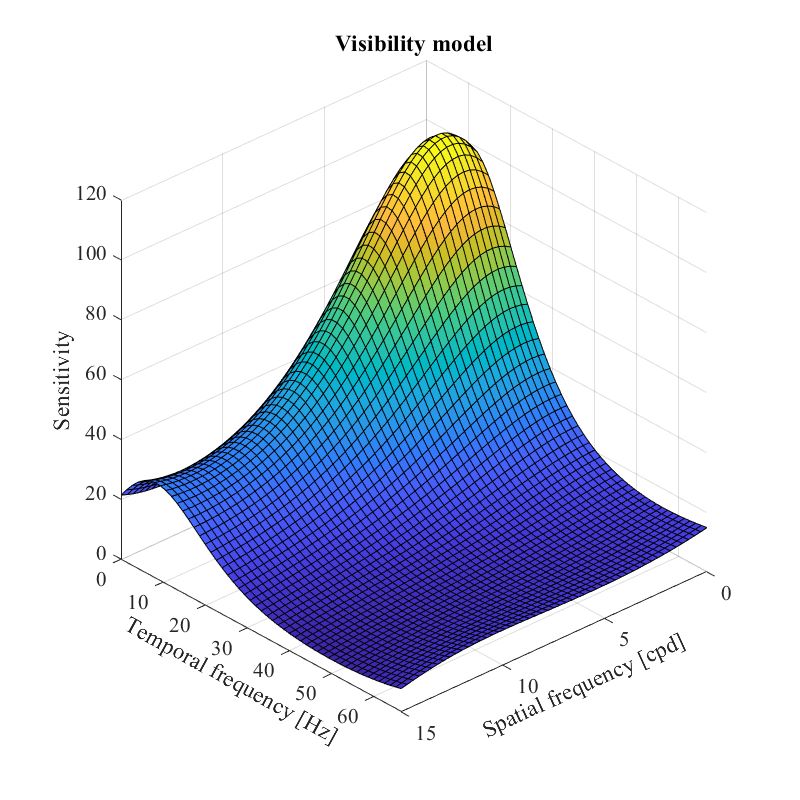
Based on the experimental data, the project proposes a multidimensional model of human contrast sensitivity under modern video presentation conditions. The model supports improved understanding of how spatial and temporal visual information is perceived on contemporary display systems.
The research contributes to video quality assessment, perceptual video compression, visual artificial intelligence, and immersive visual technologies by providing a psychovisual foundation for systems that process video closer to the way humans perceive visual content.
Research Contributions
Central Vision Model
- Large-scale measurement of central vision visibility thresholds under modern display conditions.
- Spatio-temporal modelling using spatial sizes and temporal modulation rates.
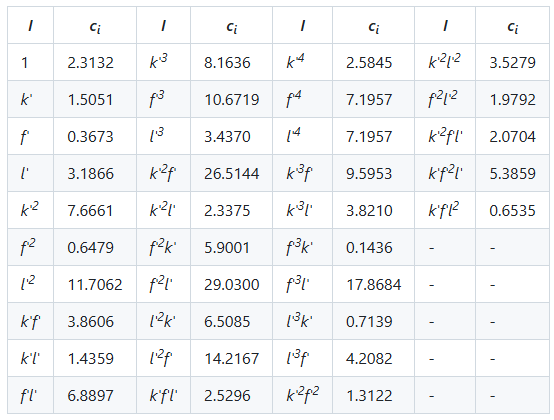
- Polynomial approximation of contrast sensitivity model coefficients and derivatives.
- Application to video quality through perceptual modelling of visible artefacts.
Peripheral Vision Characteristics
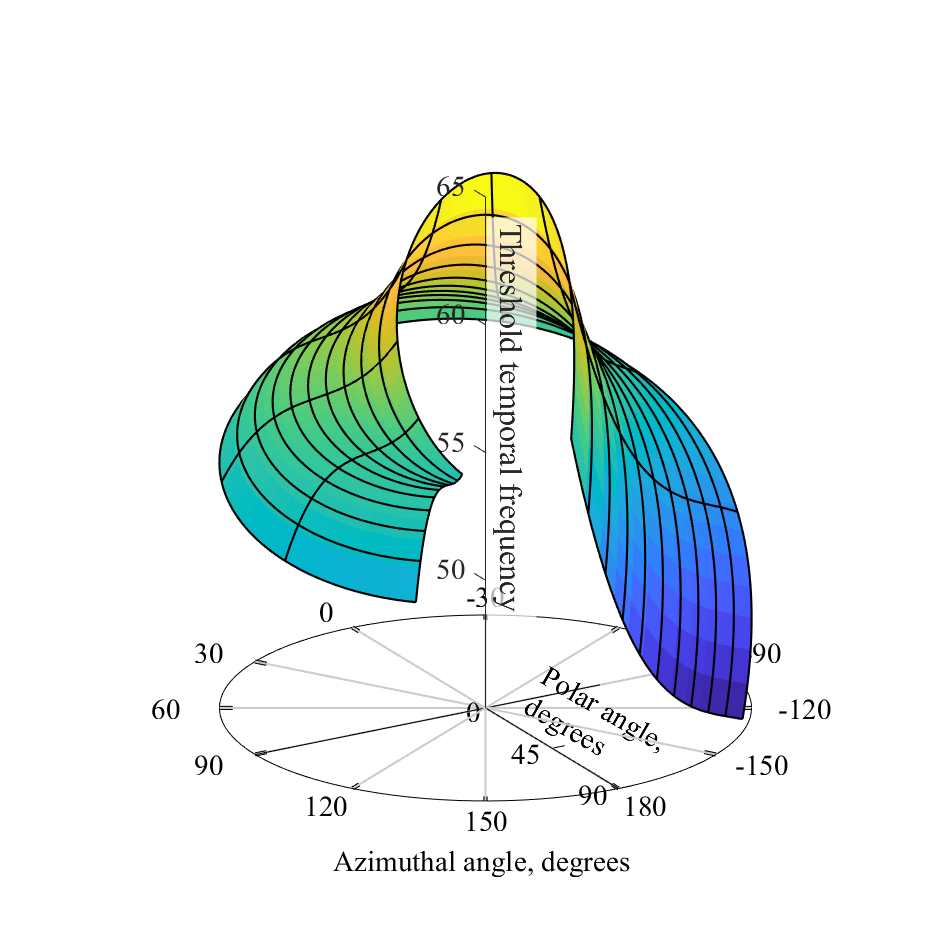
- Peripheral threshold measurements supporting video quality assessment beyond central vision.
- Human perception modelling for wide-angle and immersive video applications.
- PSNR-compatible perceptual metric development informed by peripheral characteristics.
- Foundational data for future human-inspired visual AI and video transmission systems.
Publications, Code and Data
Journal Article
Mozhaeva A, Cree MJ, Durrant RJ, Vlasuyk I, Potashnikov A, Mazin V, Streeter L (2024). A contrast sensitivity model of the human visual system in modern conditions for presenting video content. PLoS ONE, 19(5).
Conference Paper
Mozhaeva A, Vlasuyk I, Potashnikov A, Mazin V and Streeter L (2024). Video Quality Metric Compatible with PSNR Considering Recent Knowledge of Peripheral Characteristics of Human Vision. IVCNZ, Christchurch, New Zealand.
Visual Results
Contact
Primary contact: amozhaeva@eit.ac.nz.